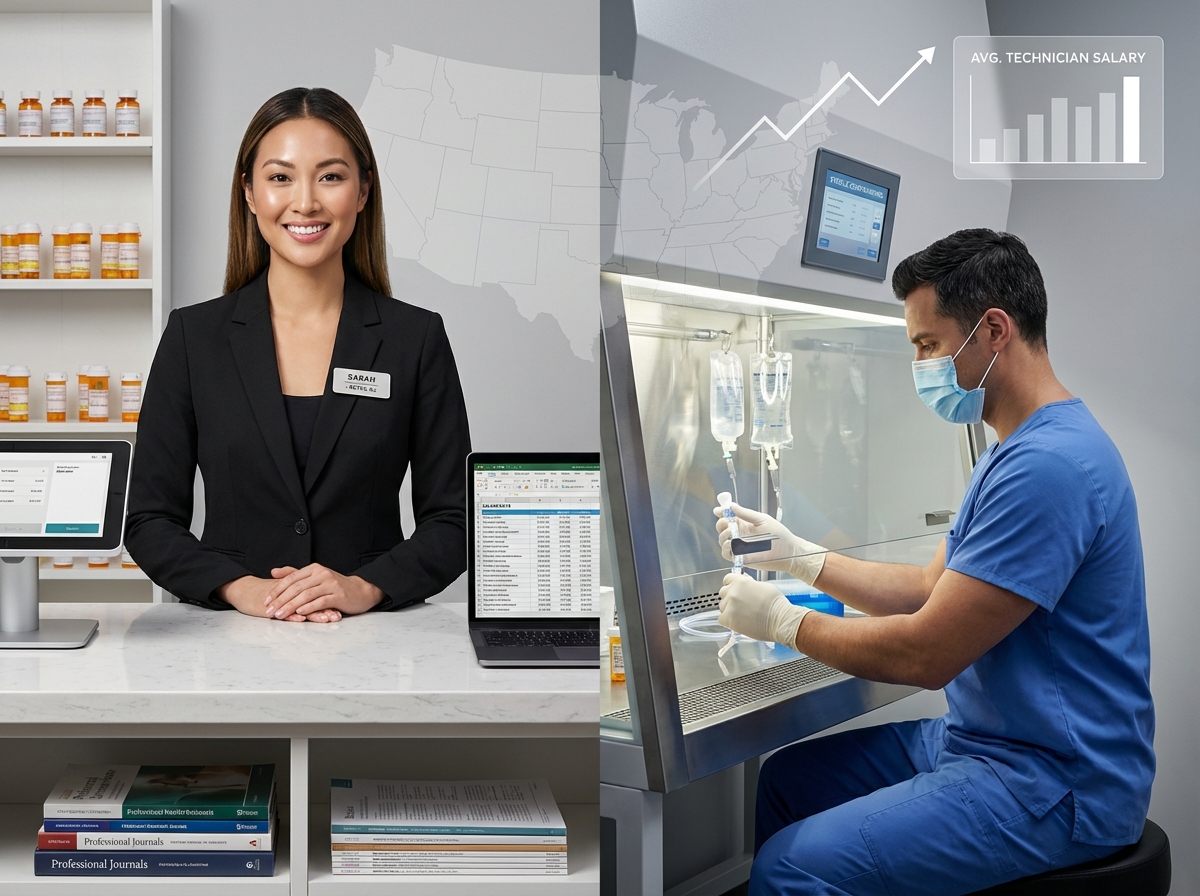
This article examines pharmacy technician wages across retail and hospital settings in the United States, highlighting pay trends, state differences, and benefits. We explore the drivers of wage gaps, certification and role premiums, and provide practical, up-to-date strategies to negotiate higher pay and improved total compensation in 2025.
National Salary Landscape for Pharmacy Technicians
The national pay for pharmacy technicians has shifted significantly over the last ten years. In 2025, the labor market remains tight. Most technicians now see a median annual salary around $43,460. This is a notable increase from a decade ago when entry-level pay was much lower. Staffing changes after the pandemic forced many employers to raise base rates to keep pharmacies running. Inflation has also played a role. While wages rose, the cost of living increased by nearly 20 percent since 2020. This means a higher paycheck does not always translate to increased purchasing power.
Current Trends and Demand Drivers
Demand for pharmacy technicians is growing due to an aging population and an increase in chronic medication needs. Technicians now handle more clinical tasks than they did in 2015, managing immunizations, performing complex compounding, and navigating difficult insurance hurdles. These added responsibilities have pushed wages up. According to data from Certified Pharmacy Technician Salary the United States – Stepful, the average hourly rate as of late 2025 is approximately $21.15. This equals about $43,993 per year for full-time work.
Pay Variation by Employer Type
Where you work matters as much as what you do. Retail chains like CVS or Walgreens employ about 52 percent of the workforce. These roles often start lower. ZipRecruiter data shows retail averages around $18.38 per hour. Hospitals pay more on average. Inpatient settings often reach $49,810 annually. Specialty compounding and research centers are the highest payers. Some research roles hit over $56,450. Outpatient care centers can even reach a median of $61,080.
Retail Pharmacy Chains
These settings offer the most jobs. Starting pay can be as low as $15 per hour in some regions. The upper end for experienced retail techs is around $23.80 per hour.
Hospital Inpatient Systems
Hospitals require more technical skills. You might work with IV admixtures or chemotherapy drugs. This complexity leads to higher pay. The average for hospital techs is roughly $49,810, but specialized roles in surgical centers pay much more.
Long Term Care and Specialty
Facilities that serve nursing homes or focus on sterile compounding offer a middle ground. They often pay better than retail but have more predictable hours than a busy hospital.
Travel Pharmacy
Travel technicians are a smaller group. They fill temporary gaps in staffing. These roles often pay the highest hourly rates. They include stipends for housing and travel expenses.
Geographic and Local Market Factors
Your zip code is a major factor in your take-home pay. States with a high cost of living usually pay more. Oregon and Alaska are currently among the highest-paying states. Oklahoma and Alabama remain on the lower end of the scale. Local labor market tightness also drives raises. If a city has a shortage of certified techs, pharmacies must compete by offering better wages.
| State | Average Annual Salary |
|---|---|
| Oregon | $44,925 |
| Alaska | $39,562 |
| Hawaii | $39,336 |
| District of Columbia | $38,898 |
| Ohio | $35,799 |
| Florida | $33,165 |
| Pennsylvania | $31,727 |
| Oklahoma | $30,191 |
Metro areas show even more variation. The New York-Newark-Jersey City area employs over 26,000 technicians. Chicago and Los Angeles also have high employment numbers. In these cities, the sheer volume of pharmacies creates a competitive environment for workers. You can find more details on state-specific figures in this guide on Pharmacy Technician in a Hospital vs. Retail (Salary and Duties).
Licensing and Union Influence
State requirements change the pay landscape. Some states only require registration. Others demand national certification through the PTCB or NHA. Certified technicians almost always earn more and have access to higher-level roles. Union presence is another factor. In states with strong healthcare unions, technicians often have structured pay scales. These scales include guaranteed raises and better job security. Non-union shops may offer more flexibility but less predictability in wage growth.
Verifying Local Salary Data
Data changes quickly. To find the most accurate numbers for your specific city, use multiple sources. The Bureau of Labor Statistics (BLS) provides the most authoritative annual medians. State workforce agencies offer data on local growth. Sites like Indeed and PayScale show real-time job postings. These postings reflect what employers are actually offering today. Always check the date on any salary report. A figure from 2022 will not reflect the 2025 market. Look for recent postings in your metro area to see the current “going rate” for your experience level. This helps when you prepare for a performance review or a new job offer.
Comparing Retail and Hospital Pay and Benefits
Choosing between a retail pharmacy and a hospital setting is the most significant decision a pharmacy technician makes regarding their lifetime earnings. While the work involves the same medications, the financial structures of these two environments operate on entirely different logic. Retail pay often centers on volume and efficiency. Hospital pay focuses on clinical specialized skills and shift coverage.
Base Wages and Pay Structures
Retail chains typically use hourly wage bands based on local market competition. A technician at a large drug store chain might start between $15 and $19 per hour in 2025. These companies often use commission-like incentive programs. These rewards are tied to sales metrics such as the number of flu shots scheduled or the percentage of prescriptions enrolled in automatic refills. While the base pay might be lower, a high-performing retail tech in a busy store can sometimes bridge the gap through these performance bonuses.
Hospital systems use structured pay scales. These are often transparent and public if the facility is state-run or unionized. Instead of sales metrics, hospitals use step increases. This means you get a predictable raise every year or two based on your length of service. Hospitals also offer clinical responsibility premiums. If you move from a general floor to the intensive care unit pharmacy, your hourly rate usually increases to reflect the higher stakes.
Shift Differentials and Overtime
The way you earn extra money differs greatly by setting. Retail pharmacies often close at night, which limits your ability to earn shift differentials. You might get a small bump for working Sundays or holidays. Hospitals operate 24 hours a day. This creates massive opportunities for shift differentials. Working the evening shift might add 10 percent to your base pay. The overnight shift often adds 20 percent or more.
Overtime is also handled differently. Retail stores often try to limit overtime to control labor costs. Hospitals frequently have staffing gaps in inpatient units. This makes overtime more available for those who want to maximize their take-home pay. A hospital technician working one extra overnight shift per week can easily out-earn a retail manager.
Total Rewards and Benefits
Total compensation includes more than the number on your paycheck. Hospital systems generally offer more robust health insurance plans with lower premiums. They often provide 403b retirement plans with employer matching. Retail chains usually offer 401k plans.
One major advantage in the hospital sector is tuition assistance. Many health systems will pay for you to go back to school for nursing or pharmacy school. They also tend to cover the costs of advanced certifications. Retail pharmacies might pay for your initial PTCB exam, but they rarely fund specialized training.
Regional Pay Band Examples
Pay varies significantly by geography and cost of living. Below are typical annual salary ranges for pharmacy technicians in late 2025 across different regions.
| Region | Low (Entry Level) | Mid (3-5 Years) | High (Specialized/Lead) |
|---|---|---|---|
| Pacific Northwest (e.g., Oregon) | $38,000 | $45,000 | $58,000 |
| Northeast (e.g., New York) | $36,000 | $44,000 | $55,000 |
| Southeast (e.g., Florida) | $31,000 | $35,000 | $46,000 |
| Midwest (e.g., Ohio) | $32,000 | $37,000 | $48,000 |
When Retail Out-Earns Hospital
It is a common myth that hospitals always pay more. There are specific scenarios where retail is more lucrative. Evening manager roles at high-volume 24-hour retail locations often come with significant premiums. Some bonus-heavy chains offer annual payouts that can reach 5 percent of your total salary if the store hits its targets.
Specialized retail roles also command higher wages. An immunization-certified technician who spends their day administering vaccines in a retail clinic can earn a premium of 10 percent over a standard filler. Independent pharmacies in rural areas might also pay more to attract talent away from the big cities.
Premium Hospital Roles
Hospitals pay the most for technicians who handle high-risk medications. These roles require precision and advanced training.
Sterile Compounding Specialist
These technicians work in cleanrooms preparing IV bags. They typically earn a 15 percent premium over general staff.
Oncology and Chemotherapy Tech
Handling hazardous drugs requires strict safety protocols. This role often commands a 20 percent premium.
Travel Pharmacy Technician
Travelers take short-term assignments in understaffed facilities. They often earn $25 to $35 per hour as well as housing stipends.
Intangible Benefits
Schedule stability is a major factor in total satisfaction. Retail schedules can be erratic and change week to week. Hospitals often use block scheduling. This allows you to know your shifts months in advance. Career ladders are also more defined in hospitals. You can move from Tech I to Tech III or transition into pharmacy informatics or 340B program management.
Unionization is more common in hospital settings. Union contracts provide job security and guaranteed wage increases that retail workers rarely see. However, retail offers the benefit of working closer to home and having more frequent interactions with the community.
Total Compensation Comparison Checklist
When you receive two offers, do not just look at the hourly rate. Use this checklist to quantify the real value of each position.
- Base Hourly Rate. Calculate the annual total based on 2,080 hours.
- Shift Differentials. Estimate your monthly earnings from evening, night, or weekend bumps.
- Retirement Match. Calculate the dollar value of the employer contribution.
- Health Insurance Premiums. Subtract the monthly cost of the plan from your take-home pay.
- Paid Time Off. Assign a dollar value to the number of vacation and sick days offered.
- Tuition and Certifications. Add the value of any training the employer pays for directly.
- Commute Costs. Subtract the cost of gas or transit from your daily earnings.
Comparing these factors side by side reveals that a $22 per hour retail job might actually be worth less than a $20 per hour hospital job once you factor in the 403b match and lower insurance costs. For more details on the specific duties in each setting, you can read about Pharmacy Technician in a Hospital vs. Retail (Salary and Duties) to see which environment fits your career goals.
Proven Strategies to Boost Pay and Negotiate Better Compensation
Moving from a standard hourly rate to a premium compensation package requires a shift in how you view your role. In the current 2025 labor market, the average pay for a pharmacy technician sits at $21.15 per hour. This figure represents a broad average, but top earners often exceed this by focusing on specialized skills and data-backed negotiations. If you want to move beyond the median, you must treat your career like a business.
Building Your Professional Value
Obtain Advanced Certifications
National certification is the baseline for higher pay. Data from December 2025 shows that certified technicians consistently earn more than those who are only registered with a state board. You should prioritize the PTCB or ExCPT credentials immediately. Once you have the core certification, look at specialty credentials in areas like billing and reimbursement or controlled substances. These additions make you a subject matter expert rather than a generalist. Employers in hospital settings often have structured pay scales that automatically trigger raises when these milestones are documented.
Master High-Value Clinical Skills
Cross-training is the fastest way to increase your hourly rate without changing employers. In a hospital environment, learning sterile compounding and IV admixture is essential. These roles carry more responsibility and higher risk, which justifies a pay premium. If you work in retail, focus on becoming an immunization-certified technician. Handling vaccine administration and clinical screenings allows the pharmacist to focus on other tasks, making you indispensable to the workflow. You should aim for a 5 to 10 percent increase in base pay once you are fully trained in these specialized areas.
The Data-Driven Negotiation Strategy
Document Your Impact with KPIs
You cannot negotiate effectively using vague statements about working hard. You need a one-page business case that highlights measurable key performance indicators. Start tracking your metrics over a 30-day period. Focus on dispense accuracy rates, the number of prescriptions processed per shift, and successful vaccine administrations. If you managed inventory and reduced waste or identified expired products before they became a loss, quantify those savings in dollars. Presenting a document that shows you maintained a 99 percent accuracy rate while handling high volume provides a logical reason for a supervisor to approve a raise.
Time Your Request Correctly
The best time to ask for more money is not always during your annual review. You should align your request with the annual budget cycle of your organization, which often happens three to four months before the new fiscal year starts. If you wait until the review, the budget for raises might already be locked. Another ideal time is immediately after you complete a major project or earn a new certification. This ensures your value is fresh in the mind of the management team.
Negotiation Scripts and Templates
Asking for a Performance Raise
When you meet with your supervisor, stay focused on your contributions. Use a script that emphasizes your growth and future potential.
I have been with the pharmacy for 18 months and recently completed my sterile compounding certification.
Over the last quarter, I maintained a 99.5 percent accuracy rate and helped reduce inventory waste by 12 percent.
Based on these contributions and current market rates for certified techs in our area,
I would like to discuss adjusting my hourly rate to $24.00.
Countering an External Offer
If you receive an offer from another facility, you can use it as leverage if you prefer to stay with your current employer. Be professional and avoid giving ultimatums.
I enjoy working with this team and value the culture here.
However, I have received an offer from a local health system that includes a 15 percent increase in base pay.
I would prefer to stay here if we can close the gap in compensation.
Is there flexibility in my current rate or shift differential to match this offer?
Negotiating Total Rewards
Sometimes the hourly rate is fixed by corporate policy. In these cases, negotiate for benefits that have a high cash value. This includes extra paid time off, flexible scheduling to reduce childcare costs, or tuition reimbursement for advanced degrees. Ask for employer-paid certifications or a higher retirement match. These “total rewards” can significantly impact your financial health even if the number on your paycheck stays the same.
Exploring High-Pay Alternatives
Travel and Contract Work
If your local market has stagnant wages, consider travel pharmacy assignments. Travel technicians often earn significantly higher hourly rates, sometimes between $25 and $35 per hour, along with tax-free stipends for housing and meals. This is a great way to build a financial cushion quickly. Per diem pools are another option. Working per diem at a hospital while keeping a part-time retail job allows you to pick up shifts at a higher “flat rate” because the employer does not have to pay for your benefits. Some technicians also find success with 1099 contract work for independent pharmacies or specialized compounding centers.
The Role of Unionization
In some states, joining a union can lead to higher base pay and more transparent step increases. Unions provide collective bargaining power which often results in better health insurance and job security. However, you must weigh this against the cost of monthly dues and a potentially less flexible relationship with management. Research the union presence in your specific region to see if the pay scales justify the membership.
Benchmarking Your Salary
Before any meeting, use tools like the Bureau of Labor Statistics or Pharmacy Technician Salary | State-by-State Median Annual Pay to find the median for your specific city. For example, if you are in Oregon, you should know the average is around $44,925. If you are in Oklahoma, the average is closer to $30,191. Knowing these numbers prevents you from asking for too little or making an unrealistic demand. You can also check Certified Pharmacy Technician Salary the United States – Stepful for the most recent 2025 updates on hourly trends. Aim for a target premium of 10 to 15 percent above the local average if you have more than three years of experience and specialized certifications.
Frequently Asked Questions About Pharmacy Technician Pay
How much more do hospitals pay than retail on average?
Hospitals generally offer higher compensation than retail pharmacies. Data indicates that technicians in hospitals earn an average salary of roughly $49,810 per year. Retail technicians in pharmacies and drugstores earn closer to $40,170. This represents a significant gap annually. Some settings pay even more. Outpatient care centers reach an average of $61,080. You can review more about these differences at Pharmacy Technician in a Hospital vs. Retail (Salary and Duties) to understand the workload shift that comes with the higher pay.
Why does national certification matter for my salary?
Certification serves as proof of your technical knowledge. Employers often use it to distinguish between Level I and Level II technicians. A Level II technician usually has one to two years of experience and a national certification from the PTCB or NHA. These individuals handle complex tasks like sterile compounding or insurance billing. Certified technicians earn higher average wages than those who only hold a state registration. Many hospitals require national certification as a condition of employment.
What are the highest paying states for pharmacy technicians?
Geography plays a massive role in your earning potential. Oregon currently offers the highest median annual pay at $44,925. Alaska follows at $39,562. Hawaii provides an average of $39,336. The District of Columbia is another high payer at $38,898. You should check the Pharmacy Technician Salary | State-by-State Median Annual Pay to see how your specific state compares to these national leaders.
How do travel pharmacy technician rates compare to staff roles?
Travel assignments offer significantly higher hourly rates. While a standard retail technician might earn an average of $18.38 per hour, travel roles often pay between $25 and $35 per hour. These positions usually include tax-free stipends for housing and meals. They require you to move frequently. This path is excellent for technicians who want to maximize their income in a short period.
Are overtime and holiday premiums mandatory for technicians?
Federal law requires employers to pay 1.5 times the regular rate for any hours worked over 40 in a single week. Holiday premiums are not required by federal law. Many large hospital systems and retail chains offer them to attract staff. You should verify your specific state labor rules because some states have stricter requirements for daily overtime or mandatory holiday pay.
How should I evaluate benefits against my base hourly pay?
A high hourly rate is only one part of your compensation. Hospitals often provide 403b retirement plans. They frequently offer more generous paid time off than retail stores. Retail settings might provide 401k matching or performance bonuses. You should calculate the total value of health insurance premiums and tuition reimbursement. A job paying $22 per hour with great benefits might be worth more than a $25 per hour job with no insurance coverage.
Can I negotiate my salary if I am still a junior technician?
You can negotiate your pay even at the entry level. Focus on your reliability and your willingness to work difficult shifts. If you have already earned your PTCB certification, use that as a primary talking point. Mention any specialized skills like bilingual communication or previous experience in high-volume customer service. These traits reduce training costs for the employer.
What documentation proves my performance when I ask for a raise?
You need hard data to support your request. Keep a log of your productivity for 30 days. Track your dispense accuracy rates and the number of prescriptions you fill each shift. Document instances where you resolved insurance issues or improved inventory management. Showing that you maintain a 99 percent accuracy rate provides a strong business case for a wage increase.
How does unionization affect pharmacy technician pay?
Unionized technicians often work under a collective bargaining agreement. This usually results in structured pay scales based on years of service. Union roles can pay 10 to 20 percent more than non-union positions in the same area. They also offer better job security and more predictable scheduling. The trade-off is that you cannot negotiate your individual salary outside of the union contract.
Which certifications or specializations yield the best return on investment?
The PTCB CPhT certification is the most important first step. It often leads to an immediate pay bump of 5 to 10 percent. Specializing in sterile compounding or oncology pharmacy offers even higher returns. Technicians with these skills are in high demand in hospital settings. These roles can pay a premium of 15 percent over general pharmacy work. You can find current national averages at Certified Pharmacy Technician Salary the United States – Stepful which shows an average of $21.15 per hour as of late 2025.
How do I prepare for market pay research and a salary counteroffer?
Start by gathering data from sources like the Bureau of Labor Statistics and Retail Pharmacy Tech Salary: Hourly Rate December 2025 USA. Use this information to determine the average rate for your role and location. If you receive an external offer, present it to your current manager. Ask them to match the salary and the benefits. Be professional and stay focused on the market value of your skills.
What are realistic timelines for moving from entry level to senior roles?
Most technicians spend one to two years at the entry level. During this time, you should focus on earning your national certification. Moving to a Level II or intermediate role usually happens after you gain compounding or billing experience. Reaching a senior or lead technician position typically takes three to five years. You can accelerate this by taking on leadership tasks or becoming a preceptor for new hires.
| Workplace Setting | Average Annual Pay |
|---|---|
| Outpatient Care Centers | $61,080 |
| Research and Development | $56,450 |
| Medical and Surgical Hospitals | $49,810 |
| General Retail Stores | $44,770 |
| Health and Personal Care Stores | $40,170 |
Key Takeaways and Next Steps
The pay gap between retail and hospital settings remains a defining feature of the pharmacy technician profession in late 2025. Data shows that hospital roles generally offer a higher base salary. This difference stems from the technical nature of the work. Hospital technicians often handle sterile compounding, chemotherapy preparations, and complex medication delivery systems. These tasks require a higher level of precision and risk management than standard retail dispensing. Retail settings focus on high volume and customer interaction. While retail pay has increased due to staffing shortages, it often lags behind the structured pay scales found in clinical environments.
Recent figures highlight this divide clearly. The average annual wage for technicians in hospitals sits around $49,810, while those in pharmacies and drugstores earn closer to $40,170. Some specialized outpatient care centers push the ceiling even higher, with averages reaching $61,080. These numbers prove that where you work matters just as much as how long you have been working. Understanding these drivers allows you to position yourself for the highest possible earnings.
Strategies for Increasing Your Income
Certification and Specialization
Earning a national certification is the most direct way to move from a Level I to a Level II technician. Certified technicians consistently earn more than those who are only state-registered. Beyond the initial PTCB or NHA exam, specialty certifications in areas like sterile compounding or immunization provide a significant edge. Employers in 2025 prioritize candidates who can jump into advanced roles without extensive basic training. These credentials often lead to a 5% to 15% pay premium depending on the facility needs.
Cross Training and Skill Documentation
Learning every station in the pharmacy makes you indispensable. In a hospital, this means mastering the IV room and decentralized automation. In retail, it involves becoming an expert in insurance adjudication and inventory management. You must document these skills. Keep a record of your contributions, such as your accuracy rates or the number of successful prior authorizations you completed. This data serves as your evidence during a performance review. It turns a vague request for a raise into a business case based on your measurable value.
Market Research and Timing
Negotiation is about timing. The best time to ask for a raise is after a major accomplishment or when you have taken on new responsibilities. Before you meet with your manager, research local pay rates. Use resources like the Pharmacy Technician Salary guide to see how your pay compares to the state median. If you find you are underpaid, bring this data to the table. Be prepared to discuss total compensation, including health insurance, retirement matches, and tuition assistance. Sometimes a better benefits package is easier for an employer to approve than a straight hourly increase.
Prioritized Action List
Immediate Tasks
Start by benchmarking your current pay against local and national averages. Use sources like the Bureau of Labor Statistics or Stepful to find the most recent 2025 data. Request a formal, written job description from your HR department. This document helps you identify if you are already performing duties above your current pay grade. For the next 30 days, log your productivity metrics. Track how many prescriptions you process or any errors you prevent. Finally, enroll in a high ROI course, such as a PTCB specialty certificate program, to signal your commitment to growth.
Medium Term Tasks
Focus on transitioning into higher-paying environments. If you are in retail, look for opportunities to cross-train in hospital skills like aseptic technique. Pursue specialty certifications that are in high demand, such as oncology or compound pharmacy. If your personal situation allows, consider travel pharmacy technician assignments. These roles often pay significantly higher hourly rates and include housing stipends. They are an excellent way to build a nest egg while gaining experience in different pharmacy systems across the country.
Long Term Career Moves
Look toward leadership or advanced clinical roles. Pursuing a supervisor certification can move you into management, where salaries are more stable and include better bonuses. If you enjoy the clinical side, use your experience as a pipeline for pharmacy school. Many technicians find that their years on the job give them a massive advantage in PharmD programs. Alternatively, look into roles in research and development or pharmaceutical sales. These sectors offer some of the highest pay in the industry, with averages often exceeding $56,000 annually.
| Setting | Average Annual Pay | Primary Benefit |
|---|---|---|
| Outpatient Care Centers | $61,080 | Highest Salary Potential |
| General Hospitals | $49,810 | Structured Career Ladders |
| Retail Pharmacies | $40,170 | Schedule Flexibility |
Annual Compensation Review
Success in this field requires active management of your career path. You should track your salary every year to ensure it keeps pace with inflation and local market trends. Re-evaluate your total compensation package whenever you change employers or take on a new role. Look beyond the hourly rate. Consider the value of a 401k match, the quality of health plans, and the amount of paid time off. Staying informed and proactive ensures that you are not just working hard, but also being paid what you are truly worth in the 2025 labor market.
References
- Pharmacy Technician in a Hospital vs. Retail (Salary and Duties) — Average pharmacy technician salary by state ; Alabama: $30,355 per year ; Alaska: $39,562 per year ; Arizona: $36,356 per year ; Arkansas: $31,098 …
- Working In Retail Pharmacy VS Hospital Pharmacy — A retail pharmacy technician enjoys benefits of flexible work schedules, a hospital pharmacy technician on the other hand earns a higher salary.
- The Pros and Cons of Working in a Retail vs. Hospital Pharmacy — Retail pharmacists tend to earn higher salaries than hospital pharmacists due to greater staffing shortages, higher prescription volumes, and …
- Pharmacy Technician Salary | State-by-State Median Annual Pay — Pharmacy technicians earn a median salary of $43,460 annually in the U.S., according to the U.S. Bureau of Labor Statistics. Take a look at …
- Retail Pharmacy Tech Salary: Hourly Rate December 2025 USA — How much do Retail Pharmacy Tech jobs pay per hour? Average hourly pay for a Retail Pharmacy Tech job in the US is $18.38. Salary range is $12.98 to $23.80.
- Certified Pharmacy Technician Salary the United States – Stepful — As of December 20th, 2025, the average salary for a Pharmacy Technician in United States is $21.15 per hour, which is equal to $43,993 per year. Our data is …
EMPTY